
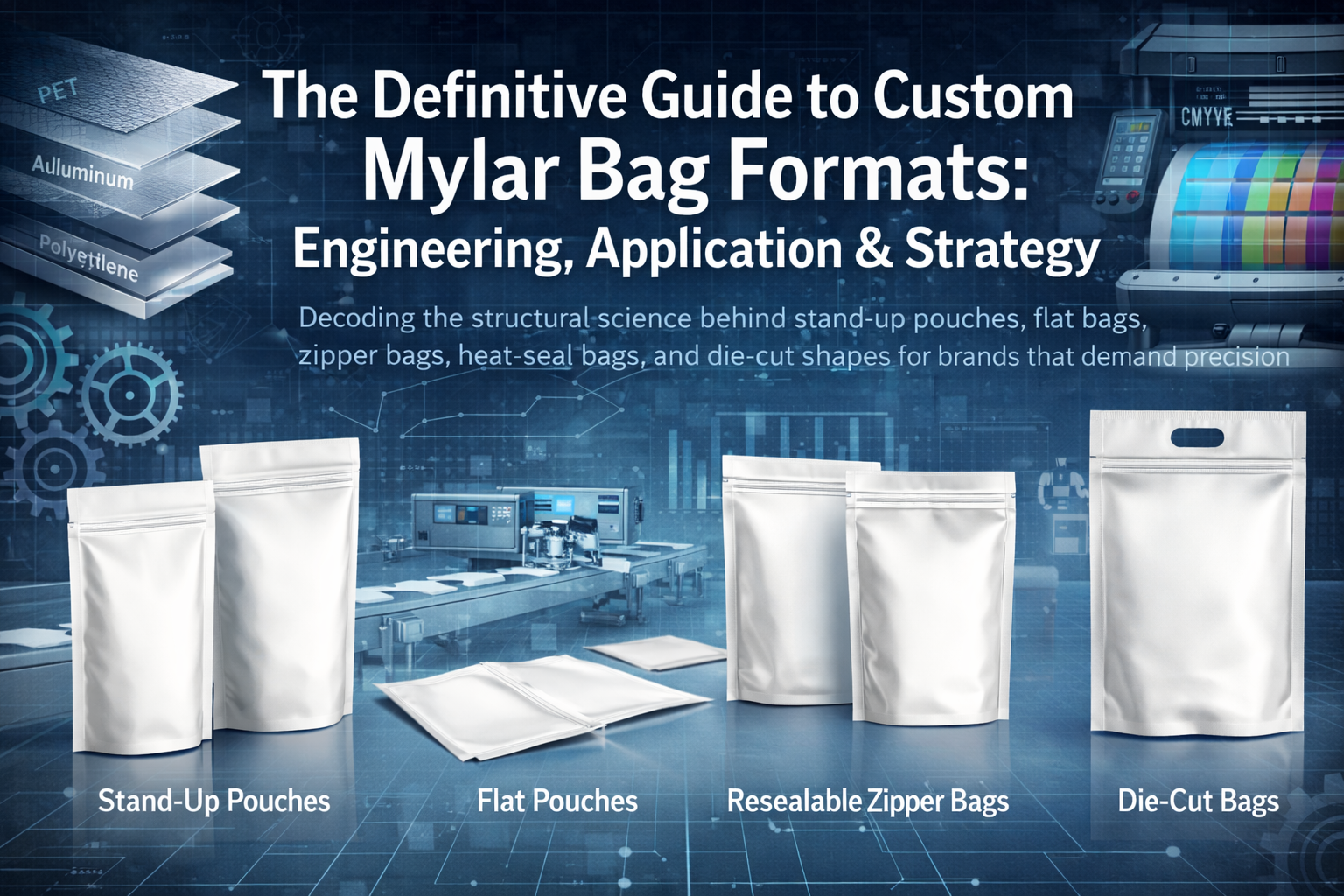
Decoding the structural science behind stand-up pouches, flat bags, zipper bags, heat-seal bags, and die-cut shapes for brands that demand precision.
Introduction: Packaging as Precision Infrastructure
In the landscape of modern branding, packaging is the silent ambassador. For sectors where freshness, safety, and shelf impact are non-negotiable—such as cannabis, premium foods, and nutraceuticals—the choice of packaging format is a critical operational and strategic decision.
Custom Mylar bags represent the pinnacle of flexible packaging technology. But not all Mylar is created equal. Beyond the material’s inherent barrier properties lies the decisive factor of structural format—the architectural design that dictates a package’s performance in logistics, retail, and the user’s hands.
This guide serves as a definitive technical resource, dissecting the five primary Mylar bag formats to empower brands in making informed, data-backed packaging investments.
Part 1: The Material Foundation — Beyond “Metalized Plastic”
True custom Mylar is a laminate, typically structured as PET / Aluminum / Polyethylene. Each layer serves a critical function:
- PET (Polyester): Provides superior tensile strength, puncture resistance, and a brilliant printing surface.
- Aluminum Foil: The impermeable core, blocking oxygen, moisture, and light—the primary agents of degradation.
- Polyethylene (Sealant Layer): Enables reliable, consistent heat sealing to create a hermetic, tamper-evident closure.
This engineered composition is what transforms a simple pouch into a protective barrier system, ensuring product integrity from filling to final use.
Part 2: The Five Architectural Formats — Form Follows Function
1. Stand-Up Pouches: The Sovereign of the Shelf
- Structural Definition: Features an integrated bottom gusset that expands when filled, enabling independent, upright stability.
- Engineered Purpose: Designed for retail dominance. It maximizes billboard space for graphics, enhances brand visibility, and offers superior shelf presence in competitive environments like dispensaries and gourmet stores.
- Ideal Application: Retail-ready cannabis flower (3.5g to 28g), edibles, premium coffee, and snack items where visual appeal drives purchase decisions.
- Technical Note: Can be integrated with clear windows for product visibility or one-way degassing valves for fresh-roasted coffee and certain cannabis products.
2. Flat Pouches (3-Side Seal Bags): The Efficiency Engine
- Structural Definition: A streamlined, two-dimensional pouch sealed on three sides. The gusseted variant includes side folds for increased volume capacity without altering the flat profile.
- Engineered Purpose: Optimizes supply chain efficiency. Its low-volume profile allows for denser packing in shipping boxes and storage, significantly reducing logistical costs and warehouse footprint.
- Ideal Application: E-commerce fulfillment, single-serve samples, bulk ingredient storage, or as an inner liner bag within a secondary box.
- Technical Note: The most cost-effective format for high-volume runs where shelf display is secondary to protection and logistics.
3. Resealable Zipper Bags: The Guardian of Ongoing Freshness
- Structural Definition: Incorporates a precision-molded, interlocking zipper track along the opening.
- Engineered Purpose: Transforms packaging from a single-use container into a reusable freshness system. It actively extends product lifespan after opening by allowing repeated hermetic re-sealing, directly enhancing user experience and reducing waste.
- Ideal Application: Cannabis gummies, multi-serve snacks, loose-leaf tea, and supplements—any product consumed incrementally. Child-resistant (CR) zippers are now an industry standard for regulated products.
- Technical Note: Zipper reliability is critical; premium bags use wide-track zippers for easier alignment and smoother closure.
4. Heat-Seal Bags: The Impermeable Vault
- Structural Definition: Designed to be closed permanently via a thermal sealing process, often paired with a tear notch for easy opening.
- Engineered Purpose: Provides the highest level of barrier integrity and tamper evidence. The permanent weld creates an unbroken shield against moisture, oxygen, and contamination, offering uncompromising security.
- Ideal Application: Single-use, moisture-sensitive products like cannabis concentrates, pharmaceutical samples, high-value spices, and diagnostic test kits.
- Technical Note: The quality of the polyethylene sealant layer directly determines seal strength and consistency.
5. Die-Cut Bags: The Sculpture of Brand Identity
- Structural Definition: Custom-shaped using precision steel-rule dies to create non-rectangular forms—logos, silhouettes, or abstract shapes.
- Engineered Purpose: Serves as the ultimate tool for brand disruption and memorability. It breaks the visual monotony of traditional packaging, creating a powerful tactile and visual statement that drives social media engagement and shelf standout.
- Ideal Application: Limited edition releases, luxury product lines, or any brand where distinct identity is a core competitive advantage.
- Technical Note: Requires expert dieline engineering to ensure structural stability and efficient material use.
Part 3: The Canvas of Perception — Printing & Finishing Technologies
The chosen format is the body; print and finish are the voice and attire.
- Printing Technologies:
- Rotogravure: The gold standard for mass production. Offers unparalleled, consistent color vibrancy and fine detail for brand colors and complex graphics.
- Flexographic: A versatile, cost-effective solution for medium to long runs, with excellent quality and faster plate production than gravure.
- Digital Printing: The key to agility. Enables economical short runs, rapid prototyping, and infinite customization (variable data, sequential numbering) without plates.
- Finishing & Coatings:
- Soft-Touch Matte Lamination: Conveys a premium, luxurious feel and resists fingerprints.
- Gloss Lamination: Provides vibrant color pop and a classic, protective shine.
- Spot UV: Adds selective high-gloss texture over specific design elements for dramatic contrast.
- Foil Stamping: Imparts metallic elegance and superior shelf reflectivity.
Part 4: Decision Matrix — Selecting Your Strategic Format
| Primary Goal / Product Type | Recommended Format | Key Reason | Critical Technical Spec |
|---|---|---|---|
| Premium Retail Shelf Impact | Stand-Up Pouch | Maximizes visibility & brand presence | Material gauge (>3.5 mil for rigidity) |
| E-commerce & Logistics Efficiency | Flat/Gusseted Pouch | Minimizes shipping volume & cost | Puncture resistance (Dart Drop Test) |
| Multi-Use Consumer Convenience | Resealable Zipper Bag | Extends freshness, enhances UX | Zipper track width & CR compliance |
| Absolute Moisture/Oxygen Barrier | Heat-Seal Bag | Provides hermetic, tamper-evident seal | Seal strength & integrity (Peel Test) |
| Brand Differentiation & Launch Impact | Die-Cut Bag | Creates unique, ownable shape | Dieline engineering for structural stability |
Part 5: Technical FAQ: Engineering & Customization
Q: What is the most important factor for keeping cannabis flower fresh in a Mylar bag?
A: The oxygen barrier property of the aluminum foil layer is paramount. It must be combined with a robust heat seal to create a truly airtight environment. Look for suppliers who can reference Oxygen Transmission Rate (OTR) data for their laminate.
Q: Can you get a child-resistant closure on a stand-up pouch or a die-cut bag?
A: Absolutely. Advanced CR solutions, such as press-to-close zippers or tear-tab-initiated zippers, can be integrated into virtually any format. The engineering challenge increases with complex shapes, which is a key differentiator for expert manufacturers.
Q: What printing method is best for small-batch or prototype runs?
A: Digital printing is ideal for prototypes and small batches due to its lack of plate costs and quick turnaround. For final production runs over ~10,000 units, flexographic or rotogravure printing typically offers better per-unit economics and color consistency.
Conclusion: The Strategic Imperative of Informed Choice
Selecting a Mylar bag format is a cross-functional decision with implications for marketing, operations, compliance, and finance. It is the intersection of material science, structural engineering, and brand strategy.
An informed choice protects your product, amplifies your brand, and optimizes your supply chain. An uninformed choice risks all three.
Ready to engineer your packaging solution with precision?
- Download our comprehensive Mylar Material & Format Specification Sheet for detailed technical data.
- Consult with our packaging engineers for a complimentary format analysis tailored to your product.